



Excavator
Your Leading Shandong Shante Heavy Industry Machinery Co.,Ltd. Supplier
Shandong Shante Heavy Industry Machinery Co., Ltd. is one of leading manufacturer in China specializing in mining machinery researching, designing, manufacturing and sales.The range of products include loader and excavator, mine car, etc. The products are widely used for all kinds of mine, metal mine, non-metal mine, water project, hydropower project, water diversion tunnel project, subway station etc.
Shandong Shante Heavy Industry Machinery Co., Ltd. is a large-scale production enterprise of mining construction equipment. The mining construction equipment and equipment mainly operated by the company have been sold to various provinces and cities across the country and abroad through B2B and B2C. The company workshop covers an area of more than 30,000 square meters. There are 688 employees, including 32 experts and scholars, 65% of them have a college degree or above, and more than 30% are senior technicians.
The company is engaged in the research and development, manufacturing, production and sales of mining equipment. The products include mining electric excavators, mining slag scrapers, backhoe loaders, roadway repairers and other four series of more than 20 varieties. The products are sold to In 26 provinces, municipalities and autonomous regions, there are 158 franchise, agency and direct sales outlets, and have won honorary titles such as provincial and municipal "Advanced Enterprise", "Contract-honoring and Promise-keeping Enterprise" and "Provincial Civilized Unit".
The company's modern assembly line production is based on the four concepts of "precise design, lean manufacturing, fine management, and fine service", in order to respond quickly to the market, produce products that meet the needs of different customer groups. "Integrity-based, technology first, customer first, reputation" is our eternal purpose! All the staff of the company pay tribute to all sectors of society and look forward to your visit and patronage!
Why Choose Us?
High quality
Our products are manufactured or executed to very high standards, using the finest materials and manufacturing processes.
Competitive Price
We offering a higher-quality product or service at an equivalent price. As a result we have a growing and loyal customer base.
Rich experience
Our company has many years of production work experience. The concept of customer-oriented and win-win cooperation makes the company more mature and stronger.
Global shipping
Our products support global shipping and the logistics system is complete, so our customers are all over the world.
After-sale service
Professional and thoughtful after -sales team, let you worry about us after -sales Intimate service, strong after -sales team support.
Advanced equipment
A machine, tool or instrument designed with advanced technology and functionality to perform highly specific tasks with greater precision, efficiency and reliability.


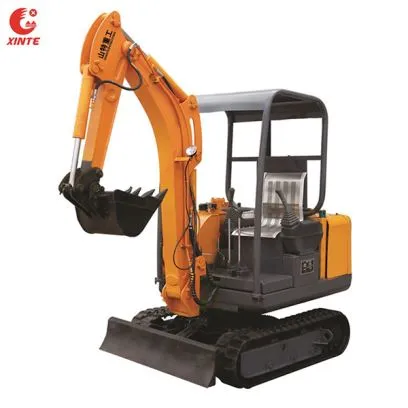
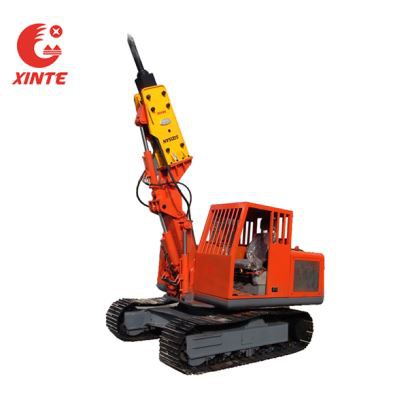
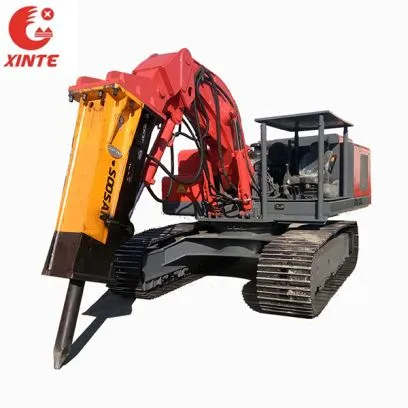
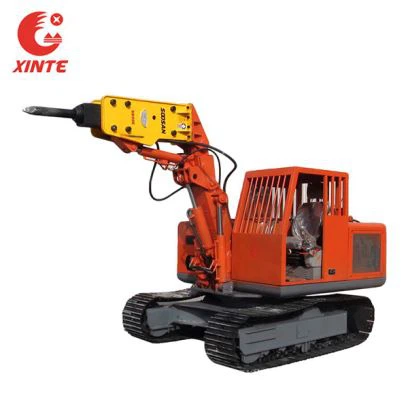
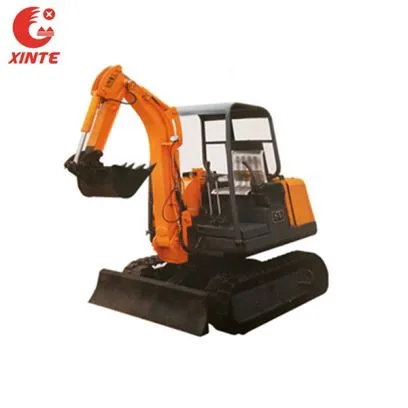

Excavators are heavy construction equipment primarily consisting of a boom, dipper (or stick), bucket and cab on a rotating platform known as the "house" - although the largest form ever, the dragline excavator, eliminated the dipper in favor of a line and winch.
The modern excavator's house sits atop an undercarriage with tracks or wheels, being an evolution of the steam shovel (which itself evolved into the power shovel when steam was replaced by diesel and electric power). All excavation-related movement and functions of a hydraulic excavator are accomplished through the use of hydraulic fluid, with hydraulic cylinders and hydraulic motors, which replaced winches, chains, and steel ropes. Another principle change was the direction of the digging action, with modern excavators pulling their buckets toward them like a dragline rather than pushing them away to fill them the way the first powered shovels did.
Benefits of Excavator
Versatility
Excavators are incredibly versatile machines that can handle a wide range of tasks, from digging to demolition. They are equipped with a range of attachments that make it easy to switch between tasks, making them ideal for use in multiple industries.
Efficiency
Excavators are known for their efficiency, and they can handle large amounts of material in a short amount of time. They also have high-powered hydraulic systems that allow them to work quickly and efficiently, reducing the amount of time and labour required for a project.
Power and strength
Excavators are equipped with powerful engines and hydraulic systems, making them strong and capable of handling tough and heavy-duty tasks. They can dig deep into the ground, break down large structures, and move massive amounts of materials.
Precision and control
Excavators are equipped with precision controls and instruments that allow the operator to perform tasks with accuracy and control. They are equipped with joysticks and control panels that make it easy for the operator to manoeuvre the machine and control the attachments.
Improved safety
Excavators are designed to improve safety in the workplace. They are equipped with safety features, such as stability control and emergency shut-off buttons, that help prevent accidents and injuries. Additionally, they reduce the amount of manual labour required, making work processes safer and more efficient.
Types of Excavator
Crawler excavators
The most commonly recognized excavator used for mining, trench digging, and landscape grading is the crawler excavator. Crawler excavators get their name because of the way they travel on a job site with their tracks. They are incredibly powerful machines with hydraulic power. Because of the tracks, they are better suited for rough and uneven terrain.
Dragline excavators
Dragline excavators are a larger kind of excavator that uses a hoist rope and dragline system to clear dirt and soil for underwater projects, pile driving, or road excavations. Because of their weight and awkward shape, they're normally hauled in separate pieces to a job site before being assembled. These excavators are used for larger job sites and projects.
Suction excavators
Suction excavators use water jets and a high-pressure vacuum to clear dirt, soil, and debris. Operated out of a wheeled vehicle, the suction excavator is used for underground applications, debris cleanup, and other delicate excavation projects.
Long-reach excavators
With arms that extend up to 100 feet with attachments, the excavator is good for heavy-duty digging, industrial demo projects, and reaching further than most other excavators.
Mini Excavator
A compact, smaller version of a crawler excavator, mini excavators are useful in narrow job sites, job sites with obstacles, and jobs with delicate terrain like landscaping. Mini excavators have zero tail-wing capability and are ideal for small jobs.
Wheeled excavator
The wheeled excavator is the same as a regular excavator but is fitted on wheels instead of tracks. Wheeled excavators are more popular in Europe and are typically used for working in urban areas since their wheels are kinder to finished roads and pavement than the traditional metal track.
Construction
Excavators are essential in construction projects, from digging foundations and trenches to removing materials and debris from construction sites. They can quickly and efficiently handle large amounts of earth and rock, making construction processes faster and easier.
Demolition
Excavators are also commonly used in demolition projects. They are equipped with powerful hydraulic systems that can easily break down buildings, walls, and other structures. They can also be used to remove debris and rubble from the demolition site.
Landscaping
Excavators are also useful in landscaping projects. They can be used to dig and grade land, removing excess earth and rocks to create a smooth and level surface. They can also be used to dig ponds and lakes, as well as to create retaining walls and other landscaping features.
Mining
Excavators are used in mining projects to dig and remove materials, including minerals, coal, and other valuable resources. They can work in tough environments, making them ideal for use in mining operations.
Drilling
Excavators are also used in drilling projects, especially in the oil and gas industries. They can be equipped with drilling equipment to dig and extract resources from the ground.
Components of Excavator




Excavator tracks
The tracks of the excavator, typically made with steel-reinforced rubber, move the machine. Some excavators are wheeled but function similarly to those with tracks.
Track frame
The track frame is where the excavator tracks attach to the undercarriage, functioning similarly to axels.
Track pad
Track pads can help prevent excess noise, vibration and damage, as well as provide better traction during operation.
Track chains
Track chains are what allow an excavator to move efficiently. They function similarly to bicycle chains in that they’re made up of connected flexible links.
Track shoes
If you imagine the tracks of an excavator, the track shoes are the individual parts of the track that dig into the ground and pull the excavator along.
Track bolts
Track bolts link each track shoe together to form the entire track.
Rock guards
Rock guards are exactly what they sound like — they attach to the tracks of your excavator to protect the machine from debris and stray objects.
Sprockets
Sprockets are the mechanisms that run between the excavator track chain links. They behave like a giant bicycle sprocket, moving the chain along to propel the machine.
Rollers
Rollers are the metal wheels on an excavator undercarriage used to align the chains and move them between the sprocket and idler. There are two sets of rollers — bottom and top — to facilitate chain functionality.
Idlers
Bigger than rollers, idlers are large metal wheels within the undercarriage that help guide the excavator tracks. Idlers are the final mechanism that keep tracks running smoothly, along with the rollers and sprockets.
Main controls
This will vary depending on the machine, but this is your mission control of the excavator. This is where you’ll find the excavator’s basic controls, steering mechanisms, safety measures and more.
ROPS
ROPS stands for “rollover protective structure” and is an important safety feature. It’s meant to protect the operator in the event of a rollover.
Counterweight
The counterweight does exactly what the name implies — it counterbalances the excavator when digging, providing leverage and preventing the excavator from tipping.
Engine
The heart of the excavator, the engine is typically housed near the cab so it’s easy to access for maintenance. It’s typically powered by diesel fuel.
Hydraulic fluid tanks
As many excavators are controlled with hydraulic mechanisms, the tanks themselves are housed in the cab.
Fuel tank
Exactly what it sounds like, this is where the excavator’s fuel (as mentioned above, typically diesel) is stored.
Main control valve
The main control valve connects the engine and the hydraulic mechanisms, controlling oil pressure and powering hydraulic devices like the arm and boom.
Boom
The excavator boom is the front part that’s attached to the cab itself and holds the arm.
Arm
Sometimes referred to as the dipper or stick, the excavator arm is attached to the boom and holds the bucket. Together, the arm and boom can manipulate the bucket and get everything into position.
Bucket
The bucket is the digger on the end of the arm, responsible for all your earthmoving needs.
Cylinders
There are typically three types of cylinders on an excavator: boom, arm and bucket. The cylinders connect between each section and are responsible for articulating each. For example, the bucket cylinder connects between the arm and the bucket, and helps move the bucket back and forth.
Attachments
Finally, there are a number of attachments you can add to your excavator. This will vary depending on your project needs. Some excavator equipment attachments include:
Rotators for the bucket
Brush cutters and mowers
Stump cutters
Boom extensions
Augers
Breakers and hammers
Tree shears
Pipelayers
Grading buckets
Material of Excavator
Excavator pins
Excavator pins are usually made of a AISI 4130 or 4140 steel. The AISI 4000 series of steels are chromium molybdenum steels. Chromium improves corrosion resistance and its ability to be hardened while molybdenum increases strength and hardenability, too.
Excavator bucket sides and cutting edges
The bucket sides and cutting edge are usually made of AR steel plate. The most popular grades are AR360 and AR400. AR 360 is a medium carbon, low alloy steel that is heat treated to provide excellent abrasion resistance and high impact strength. AR 400 has also been heat treated but it provides abrasion resistance and superior yield strength. Both of these steels have been carefully quenched and tempered to product qualities that are key to a good bucket. Note that the numbers after AR are the Brinell hardness of the steel.
Excavator bucket shell
The bucket shell is often made of ASTM A572 Grade 50 (sometimes written A-572-50), a high strength, low alloy steel. This steel is alloyed with columbium and vanadium. Vanadium helps with maintaining the toughness of the steel. This grade of steel is desirable as a bucket shell material because it provides excellent strength without weighing quite as much as comparable steels such as A36. It is also readily welded and formed.
Excavator bucket teeth
Cast bucket teeth may be made of a low alloy steel with nickel and molybdenum as the primary alloying elements. Molybdenum improves the hardenability and strength of the steel and can also help minimize some forms of pitting corrosion. Nickel increases strength, toughness, and also helps prevent corrosion. They may also be made from an austempered ductile iron that has undergone heat treatment for wear and impact strength. Forged bucket teeth are also made from a heat-treated alloy steel, but the type of steel varies with manufacturer. The heat treatment improves wear properties and increases impact strength.
How to Maintain Excavator
Maintain and clean your undercarriage
Working in dirty, muddy terrains can cause undercarriage buildup. Clean your undercarriage routinely to remove dirt and debris, and prevent unnecessary wear to your excavator. When inspecting your undercarriage, look for damaged or missing pieces, and oil leaks.
Check your tracks
Check to see that your tracks have the right tension. Tracks that are too loose or too tight can result in excess wear to tracks, chains and sprockets.
Change out your air and fuel filters
While operating your excavator outdoors, debris can accumulate in your machine's air, fuel and hydraulic filters. Regularly cleaning and changing out your filters can help your excavator run its best for longer.
Monitor fluid levels
On a daily basis, check to see that all fluid levels are at their recommended levels. Check engine oil and hydraulic oil levels prior to operating your excavator to ensure it's working well throughout the day.
Drain water separator
As excavators sit outdoors overnight, condensation can often build up in the engine. To prevent corrosion from trapped water becoming steam, drain your water separator daily.
The History of the Excavator
The first machine to resemble an excavator was the steam shovel. An ancient dinosaur next to the modern excavator, this piece of equipment was a game-changer when it was invented by William Otis who in 1839 received a patent for the design. It was originally fitted on railway tracks to allow mobility.
The machine could move up to 300 cubic yards a day compared to the 12 cubic yards that could be moved by a man. This machine was used to build the Panama Canal and dig the foundations of early skyscrapers. The machine was used and updated into the 1920s as tracked and wheeled equipment became more popular. In 1931 the last railroad shovel was shipped.
Much like with the bulldozer and other pieces of equipment, various pieces had to come together to create the excavator. Sir W.G. Armstrong & Co. was a British business that had developed the hydraulic system that would be used in the modern excavator.
Designed to use water instead of hydraulic fluid, this system was invented in 1882. The first hydraulic shovel was patented by Kilgore Machine Co in Minnesota in 1897 and used the technology developed by Sir W.G. Armstrong & Co.
None of these excavators could rotate the full 360 degrees that exist now with the modern excavator. This didn’t happen until the 1960s when a French company called Poclain invented an excavator with cylinders and a hydraulic pump. The TY45 made history as the first fully revolving hydraulic excavator.
An excavator works by using a combination of hydraulic cylinders and motors to control the movement of its various parts. The operator sits in the cab and uses joysticks to control the boom, dipper, and bucket. These joysticks control the flow of hydraulic fluid to the different cylinders, which in turn move the parts of the excavator.
The boom: This is the long arm that extends out from the front of the cab. It is typically made up of several sections that are connected together by hinges.
The dipper: The stick or dipper is attached to the end of the boom and is used to dig into the earth.
The bucket: This is attached to the end of the dipper and is used to scoop up and move the excavated material.
The undercarriage: Consists of tracks or wheels that allow it to move around the job site. The tracks are powered by a separate hydraulic motor and are controlled by the operator using foot pedals in the cab.
The excavator also has an engine that powers the hydraulic system. It pumps the oil through a series of valves and into the cylinders to make the excavator move.
Our Factory
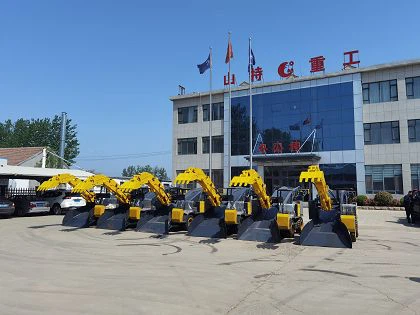
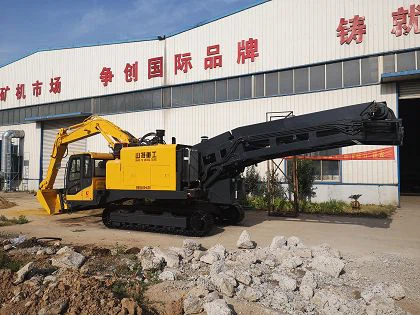
Initially founded in 1998, Shandong Shante Heavy Industry Machinery Co., Ltd. are located in Yuncheng Industry Zone of Heze city Shandong Province.The transport is very convenient.Qingdao port is 500km far away from our company and Jinan Airport is 150km far way from our company.

Our Certificate


FAQ